If you’re a homeowner in Albuquerque planning a renovation, you’re probably wondering which updates are worth the investment right now – and which ones are just noise. The short answer: the home remodeling trends gaining real traction in 2025 and heading into 2026 center on functional living spaces, energy-smart upgrades, spa-level bathrooms, and designs built around how families actually use their homes today. Not every trend fits every home, and this guide will help you figure out what makes sense for yours.
Why Albuquerque Homes Have Their Own Remodeling Conversation
National trend reports are useful, but they’re written for a broad audience. Albuquerque has a different starting point than most cities. The climate here is high desert – intense sun, low humidity, mild winters compared to the northern states, and summers that push people toward shade, covered patios, and efficient cooling.
A lot of Albuquerque’s existing housing stock reflects that: pueblo-revival architecture, flat roofs, stucco exteriors, and smaller interior footprints than you’d find in newer suburban builds elsewhere. When you layer national trends on top of that reality, some fit well, and some don’t.
That’s worth keeping in mind as you read through what’s trending. The goal isn’t to chase design trends – it’s to find the ones that make your specific home more comfortable, more functional, and worth more when the time comes to sell.
1. Kitchens Are Getting Warmer (And More Personal)
The all-white kitchen with grey countertops has been the default for about a decade. That’s starting to shift, and it’s showing up in remodel requests across the board.
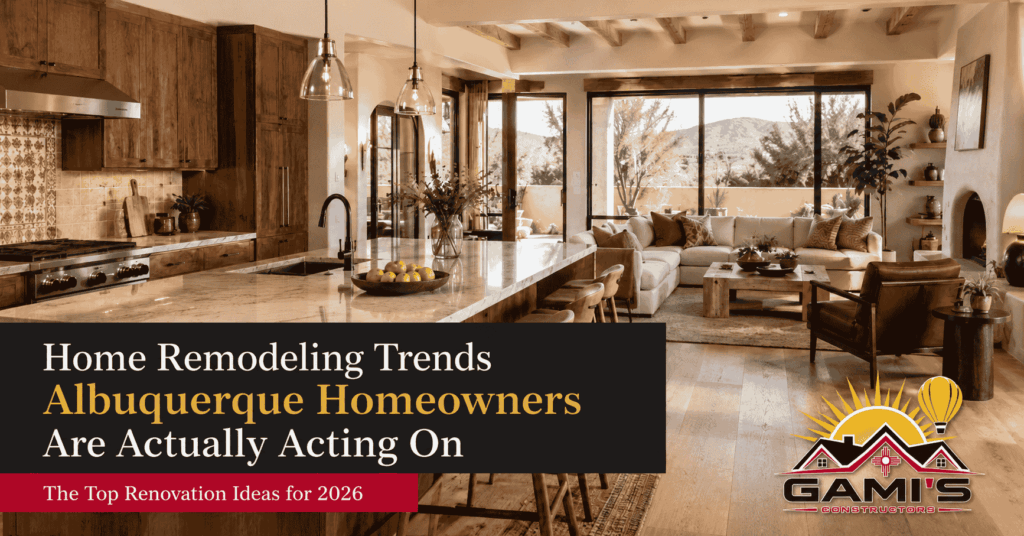
What’s replacing it: rich, earthy tones – warm terracotta, deep olive cabinetry, natural wood shelving, clay-toned walls, and stone surfaces with real texture. The look is less sterile and more lived-in, which is exactly what a lot of homeowners are asking for.
What This Means Practically
This isn’t just an aesthetic change. Warm-toned kitchens tend to use natural wood elements and stone more heavily, which means material choices matter more than they did in a painted-cabinet-over-quartz setup.
If you’re planning a kitchen remodel, some decisions worth considering:
- Cabinetry color and finish – Custom or semi-custom cabinets give you access to the deeper, richer tones trending right now. Stock cabinets have caught up some, but the range is still limited.
- Countertop material – Quartzite, leathered granite, and honed marble are gaining ground over polished quartz. They have more character and age well.
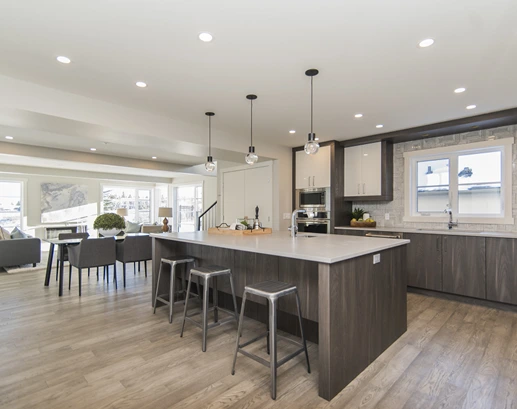
- Island function – Islands are being designed to do more: seating, storage, prep, and sometimes a second sink. If your kitchen has room for an expanded island, it’s usually worth incorporating while walls are already open.
In short: If you’re updating a kitchen in 2025 or 2026, moving away from bright whites toward warmer, layered materials is likely to feel more timeless five years from now – and more appealing to future buyers.
2. Bathroom Renovations Are Going Spa-First
This one has been building for a few years, and it’s not slowing down. Homeowners are investing in primary bathrooms that feel less utilitarian and more like a proper retreat.
The specific requests contractors are hearing most often:
- Walk-in showers with large-format tile and frameless glass
- Freestanding soaking tubs (though practical homeowners are choosing between tub and shower based on actual use, not just looks)
- Heated floors – particularly popular in Albuquerque’s cooler mornings, even in a warm climate overall
- Better lighting that layers ambient, task, and accent sources rather than one overhead fixture
- More storage is built into the design, not added as an afterthought
Is a Full Bathroom Remodel Worth It?
A primary bathroom renovation is consistently cited as one of the higher-return remodels, but the return depends heavily on execution. A well-done bathroom remodel that improves both function and finish tends to hold value. A cosmetic-only update that doesn’t address layout or fixture quality tends to look dated faster.
If your bathroom has an awkward layout – a tight shower, a toilet wedged against a wall, a vanity that blocks the door – addressing the layout is almost always worth the additional cost compared to a surface-level refresh.
In short, Spa-style bathrooms are a strong investment when the remodel addresses real functional problems in addition to aesthetics. Doing the spa look on top of a broken layout is less satisfying and less valuable.
3. Home Additions and Multigenerational Living Spaces
One of the bigger shifts in residential construction over the past few years is the multigenerational home. More families are building or renovating specifically to accommodate parents, adult children, or in-laws – either in the main house or in a separate structure on the property.
In Albuquerque, this takes a few forms:
- Room additions that expand an existing bedroom or create a dedicated in-law suite within the home
- Detached accessory dwelling units (ADUs) – a separate structure on the same property, built to function as a self-contained living space
- Garage conversions that turn underused space into a functional guest suite or studio
What to Know Before Planning a Home Addition
Permits and zoning matter. Albuquerque has specific rules around ADU construction, setback requirements, and what’s allowed on a given lot size. A licensed general contractor familiar with the city’s requirements can help you understand what’s feasible before you invest time in design.
It’s also worth thinking through the long-term use case. A space designed for an aging parent has different needs than a space designed for a returning adult child – wider doorways, single-level access, and grab-bar-ready bathrooms come up in a lot of these projects.
In short, Home additions for multigenerational use are one of the most practical investments Albuquerque homeowners are making right now. The key is planning for how the space will actually be used, not just how it looks on paper.
You can also read: How Much Does It Cost to Renovate a House?
4. Indoor-Outdoor Living – Built for the New Mexico Climate
This trend fits Albuquerque particularly well. The desert climate here is genuinely well-suited to outdoor living: low humidity, abundant sun, and evenings that cool off even in summer.
What homeowners are building:
- Covered patios and portal-style extensions that provide shade without sacrificing light
- Outdoor kitchens and prep stations for year-round grilling
- Pergolas and shade structures that work with New Mexico’s sun angle rather than against it
- Interior design that flows visually into outdoor spaces – large sliding or folding glass doors, consistent flooring materials across the threshold, or direct views from kitchen and living areas into the yard
The key difference from what’s being built in other climates: in Albuquerque, shade is the primary objective, not weather protection. That shapes everything from roof pitch to material choice to orientation.
In short: If you have a yard that’s going unused, a covered outdoor living space is one of the more natural extensions for an Albuquerque home. It adds real usable square footage without the cost of enclosed construction.
5. Flexible Rooms and Multi-Use Spaces
The pandemic shifted how people think about their homes permanently. Remote work, hybrid schedules, and the increasing overlap between work, school, and recreation inside the home have made dedicated single-purpose rooms feel like a luxury that doesn’t always pay off.
What’s replacing the formal dining room, the guest room that nobody uses, and the spare bedroom:
- Home offices that can also function as guest rooms with a Murphy bed or daybed
- Flex rooms with built-in storage and configurable furniture that shift between uses
- Kitchen islands are designed for both prep and seating, so cooking and homework or work calls happen in the same space without getting in each other’s way.
The Design Consideration That Often Gets Skipped
Flexible rooms only work if the electrical, lighting, and storage are designed around multiple uses from the start. A flex room that gets converted after the fact usually feels compromised. If this is part of your remodel, think through the full range of uses before the rough-in stage.
In short, Building flexibility into a room’s design upfront costs less than converting it later. If you’re already opening walls for another reason, it’s worth thinking about which rooms in your home could serve you better with a different configuration.
6. Energy-Efficient Upgrades – The Ones That Actually Pay Off
Energy efficiency is part of nearly every remodel conversation now, but it’s worth being specific about which upgrades actually deliver versus which ones are more about marketing than returns.
High-impact upgrades that make sense in Albuquerque:
Upgrade | Why It Works Here | Typical Impact |
Spray foam or upgraded attic insulation | Desert heat enters mostly through the roof | Lower cooling costs are significant in hot summers |
High-performance windows | Older homes often have single-pane windows; solar gain is intense | Reduces heat gain and UV damage to interiors |
Induction or electric range | Part of the broader electrification trend; also, safer indoor air quality | Moderate – depends on existing appliances |
Solar-ready electrical panel | NM has strong solar incentives; panel upgrade during remodel is cheaper than standalone | Long-term value, especially for new builds |
Heat pump systems | Efficient in the temperature range Albuquerque typically sees | Significant HVAC cost reduction over time |
The practical advice here: if you’re already doing a major remodel that touches the roof, exterior, or HVAC, layering in efficiency upgrades at that stage costs significantly less than doing them separately later.
In short, the most cost-effective time to add energy-efficient upgrades is during a larger remodel when related systems are already being touched. Doing them in isolation rarely pencils out as well.
7. Custom Home Builds – What’s Drawing People to Build Rather Than Buy
For some Albuquerque homeowners, the renovation conversation eventually becomes a build-from-scratch conversation. The existing inventory of homes is limited in certain price ranges, and the cost gap between buying an older home that needs significant work versus building new has narrowed.
What draws people toward custom home construction right now:
- Getting to specify layouts that match how a family actually lives, not how families lived in the 1980s
- Incorporating energy efficiency from the foundation up rather than retrofitting
- Building for multigenerational use from the start, rather than adding on later
- Avoiding the uncertainty of older homes – what’s behind the walls, what code issues exist, what the previous owners did without permits
Custom builds take longer and require more planning involvement from the homeowner. But for families with specific needs, a clear budget, and the right contractor relationship, it’s often the more satisfying path.
How to Decide What’s Worth Doing in Your Home
Not every trend belongs in every home. Here’s a simple filter to run any renovation idea through:
- Does it solve a real problem you have today? If the answer is no, be cautious. Trend-chasing on things that don’t fix actual friction tends to disappoint.
- Does it fit how you actually live? A soaking tub sounds great until you realize you never take baths. A home office sounds useful until you realize you prefer working at the kitchen table.
- Does it hold up in 10 years? Some trends date quickly. Warm earth tones are likely to hold better than very specific statement choices that are trendy in a narrow window.
- What does it do to your home’s value? Not all renovations are about resale, but if you might sell in the next five to ten years, it’s worth understanding which updates buyers in Albuquerque respond to.
- Can your home support it structurally? Especially relevant for additions, rooftop structures, and major layout changes. A structural assessment before you commit to a design saves expensive redesigns.
Frequently Asked Questions
Kitchen remodels, bathroom renovations, and well-designed home additions consistently show strong returns. The key is execution quality - a poorly done kitchen remodel adds less value than a modest but well-built one. In Albuquerque's market, outdoor living improvements and energy-efficient upgrades are also well-received by buyers.
Warm, earthy design palettes in kitchens, spa-level primary bathrooms, flexible multi-use spaces, indoor-outdoor living areas, and energy-efficient systems are the dominant themes heading into 2026. Multigenerational living additions are also growing steadily.
It depends on your lot, your local zoning, and what you need the space for. A well-planned addition that adds genuinely functional square footage - particularly for multigenerational living or a home office - tends to hold value. The bigger risk is building an addition that's not cohesive with the existing structure, which requires more attention to design than people sometimes expect.
Start with a clear sense of the problem you're trying to solve. Then get at least one consultation with a licensed local contractor before committing to a design - Albuquerque has specific permit requirements, and understanding what's feasible on your property before you're attached to a plan saves a lot of frustration. Budget planning should include a contingency of around 10–15% for surprises in older homes.
Layout improvements (adding or expanding an island, improving the work triangle, adding a second sink), cabinetry updates, and replacing aging appliances tend to offer the best combination of daily-use improvement and resale value. Cosmetic updates like countertops and backsplash matter too, but they're best done in combination with functional improvements.
A kitchen remodel typically takes 6–12 weeks once work starts, depending on the scope. A bathroom remodel is usually 3–6 weeks. Lead times on cabinets and specialty materials have been longer in recent years, so planning 3–4 months ahead of when you want work to start is reasonable.
This depends heavily on the condition of your existing home, how much renovation it needs, and how close the existing layout is to what you actually want. For homes that need significant structural work or that are fundamentally poorly laid out for your needs, the math sometimes favors a custom build. An honest contractor will help you run through both scenarios rather than defaulting to one answer.
Trends Are a Starting Point, Not a Blueprint
The home remodeling trends worth following in 2025 and 2026 share a common thread: they’re functional. Warm kitchens that are actually more pleasant to cook in. Bathrooms designed around real comfort, not just aesthetics. Flexible rooms that serve the whole household. Outdoor spaces that get used year-round. Additions that make multigenerational family life actually workable.
In Albuquerque, the local climate and architectural context shape how these trends translate into real projects. What works in a coastal city doesn’t always work in a high-desert home with a flat roof and a southwest orientation.
If you’re planning a renovation and want to talk through what makes sense for your specific home, Gami’s Constructors LLC offers free consultations for homeowners in Albuquerque. With more than 30 years of experience and a family-owned approach that prioritizes honest communication and quality work, they’re the kind of contractor you can have a real conversation with before you commit to anything.
Ready to start planning? Call or request a free quote at gamisconstructors.net – and find out what’s actually possible in your home.