If you’re getting ready to build a custom home in Albuquerque or anywhere in New Mexico, one question will come up before every other: where does all the money actually go?
The short answer: the most expensive part of building a house is typically interior finishes, which can account for roughly 20–25% of total construction costs. But framing, major systems like plumbing and HVAC, and the foundation aren’t far behind, and in the Southwest, soil conditions and site work can shift that picture significantly.
Why Understanding Home Building Costs Actually Matters
A lot of people go into a custom home build knowing their total budget, but not knowing how that budget gets divided. That gap causes problems if you upgrade the kitchen without realizing it crowds out something structural, or you save on windows and end up with an HVAC system that’s fighting the sun all summer.
When you understand what each part of the build actually costs, you make better trades. You spend more where it matters most to you and less where it doesn’t, which is the whole point of building custom in the first place.
The Major Cost Categories, Ranked
Here’s how home construction costs typically break down, from highest impact to lowest, along with what drives costs up or down in each category.
1. Interior Finishes: Where Most of the Budget Goes
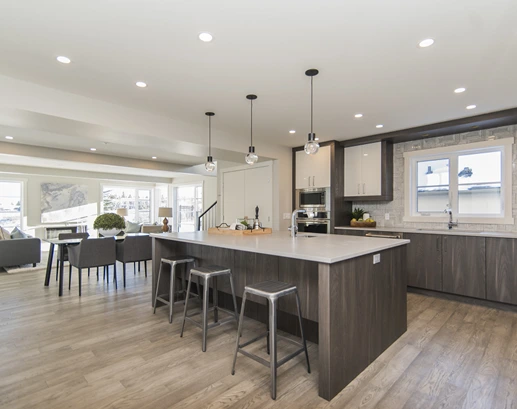
Interior finishes cover everything that makes a house feel like a home: flooring, cabinets, countertops, interior doors, trim, paint, hardware, and tile work. Together, they routinely make up the largest single slice of construction costs, often around 20–25% of the total.
This surprises a lot of people. The assumption is that concrete and lumber cost more than countertops. But when you multiply finish work across every room, every wall, and every surface in a 1,800–2,500 sq ft home, it adds up fast.
What drives interior finish costs up:
- High-end tile selections across multiple bathrooms
- Custom cabinetry versus semi-custom or stock
- Hardwood flooring throughout versus carpet in bedrooms
- Stone or quartz countertops versus laminate
- Last-minute change orders during construction
Where you have the most control: Interior finishes are almost entirely a matter of choice. You decide the countertop, the flooring, and the hardware. A good general contractor will help you understand exactly what each upgrade costs before it’s installed, not after.
In short: Interior finishes are the biggest line item in most new home budgets, and they’re also the category where you have the most personal control. Decide your priorities early and stick to them.
2. Framing: The Skeleton of Your Home
Framing typically represents 15–18% of construction costs, making it the second or third most expensive phase, depending on the build. This is the structural skeleton, floor systems, walls, roof trusses, sheathing, and the labor to put it all together correctly.
Lumber prices have been volatile over the past few years, which means framing bids can shift between the time you get a quote and the time work actually starts. A builder who orders materials early or has supplier relationships can protect you from mid-project price swings.
What affects framing costs:
- Size and square footage of the home
- Number of stories (two-story costs more per square foot than single-story)
- Roof complexity, simple gable roofs cost less than multi-plane or hip roofs.
- Lumber and material prices at the time of order
- Local labor costs
What you can do: A simpler floor plan with fewer bump-outs and a cleaner roofline will cost less to frame. If the exterior design is less important to you than interior quality, this is a reasonable place to simplify.
3. Major Systems: Plumbing, Electrical, and HVAC
These three systems, sometimes grouped as MEP (mechanical, electrical, plumbing), typically account for 15–20% of construction costs combined. They’re invisible once the walls go up, which is exactly why they’re easy to underestimate.
Plumbing depends heavily on home size, number of bathrooms, and how efficiently the layout routes pipes. A well-designed floor plan can reduce plumbing runs. A scattered layout with bathrooms on opposite ends of the house drives costs up.
Electrical is fairly consistent across homes of similar size, though smart-home features, EV charging, and upgraded panels add cost.
HVAC in New Mexico deserves special attention. The desert climate means your system has to handle hot summers and cold winters, often with extreme temperature swings between day and night. Properly sized HVAC with good duct design isn’t a place to cut corners. Undersized or poorly designed systems lead to discomfort and higher utility bills for years.
In short, Good MEP work is expensive but hard to redo after walls are closed. Pay for it to be done right, and don’t let budget pressure push you toward an undersized or poorly routed system.
4. The Foundation: More Variable Than You’d Think
The foundation often gets named as the single most expensive part of building a house, and while it’s certainly a major cost, it typically runs 10–15% of construction costs, not the top spot nationally. That said, in Albuquerque and throughout New Mexico, site conditions can push foundation costs higher than in other parts of the country.
Why New Mexico soil matters:
- Caliche, the hard calcium carbonate layer common in desert soils across the Southwest, can require additional excavation or specialized drilling, which adds labor and equipment costs.
- Expansive clay soils in certain Albuquerque neighborhoods shift with moisture changes, which demands deeper footings or engineered foundation solutions.
- Steep or uneven lots in the foothills add site preparation costs.
Common foundation types and their relative costs:
Foundation Type | Relative Cost | Common Use Case |
|---|---|---|
Slab-on-grade | Lowest | Flat lots, warm/dry climates |
Crawl space | Moderate | Sloped lots, better access |
Full basement | Highest | Cooler climates, maximum space |
Engineered/pier | Varies | Problematic soils, hillsides |
In the Albuquerque area, slab foundations are common because of the dry climate and flat-to-moderate terrain, but your specific lot may require something different. A soil report before you build is money well spent.
In short, Foundation costs depend heavily on your lot. Know what you’re building on before finalizing a budget; surprises underground are some of the most expensive in construction.
5. Exterior Finishes and Roofing
Exterior finishes, such as siding, stucco, stone, roofing, windows, and doors, typically run 10–15% of construction costs. In New Mexico, stucco is the dominant exterior finish for good reason: it performs well in the desert climate, resists moisture and heat, and fits the regional aesthetic naturally.
Roofing considerations for Albuquerque:
- Flat or low-slope roofs (common in Southwestern architecture) cost less to frame but require high-quality waterproofing
- Metal roofing lasts longer and performs well in extreme temperature swings, but carries a higher upfront cost
- Asphalt shingles are the most affordable option and work well in New Mexico’s relatively mild precipitation
Windows are a meaningful cost in desert climates because of sun exposure. Low-E glass coatings and double-pane windows cost more upfront but can reduce cooling loads significantly over time.
6. Site Work: The Costs Before Any Walls Go Up
Site work covers everything that has to happen before construction starts: surveying, permits, grading, utility hookups, drainage, and any demolition if you’re replacing an existing structure. It usually runs 7–10% of the total build cost, but it’s highly variable.
A flat, cleared lot with utilities already at the street is the cheapest scenario. A sloped lot, a lot without sewer access, or a lot with large trees to remove or difficult caliche to break through can add high cost before a single wall goes up.
This is one reason why experienced local contractors matter so much; they know what Albuquerque lots typically need, where utility connections run, and what to expect from the soil before a shovel hits the ground.
7. The Lot Itself
Land is a separate cost from construction, but it sets the baseline for everything else. In the Albuquerque metro, lot prices vary widely depending on location, size, utilities, and terrain. A more affordable lot in a developing area can mean higher site work costs. A premium lot with utilities in place may cost more upfront, but save money during construction.
The decision of which lot to buy has long-term effects on your total project cost, your home’s resale value, and how much you’ll spend on the build itself. It’s worth spending time on this choice before committing.
You can also read: How Much Does It Cost to Renovate a House?
What Actually Controls Your Budget: A Contractor’s Honest View
After reviewing where the money goes, the pattern becomes clear: most cost overruns don’t come from one expensive category; they come from decisions that change after construction begins.
Change orders are one of the most consistent budget-killers in residential construction. Changing flooring selections after tile has been ordered, adding a bathroom mid-build, or upgrading an appliance package after cabinets are already cut, each of these ripples through multiple trades and timelines.
The homeowners who stay on budget tend to share a few things in common:
- They finalize floor plans and finish selections before breaking ground, not during construction.
- They work with a contractor who gives clear, detailed estimates upfront rather than vague ranges.
- They build in a contingency, typically 10–15% for genuine surprises rather than wishful thinking.
- They resist the urge to upgrade everything. They pick two or three areas that matter most and invest there.
Cost-Saving Strategies That Don’t Sacrifice Quality
There’s a difference between cutting costs and cutting corners. Here are ways experienced builders help homeowners save money without compromising the structure or longevity of the home:
- Simplify the floor plan. Open layouts with rectangular footprints are cheaper to frame, insulate, and finish than complex shapes with many angles.
- Standardize where it doesn’t matter to you. If you don’t care about the laundry room tile, use standard options. Save the upgrade budget for the kitchen or primary bath.
- Choose materials suited to the local climate. In Albuquerque, materials that perform in a desert environment last longer and require less maintenance than products designed for humid climates.
- Get detailed bids, not ballpark estimates. A vague estimate hides assumptions that turn into change orders. Ask for line-item pricing before signing.
- Don’t skip the soil report. A few hundred dollars to understand your soil conditions can prevent foundation surprises that cost tens of thousands.
Building in Albuquerque: What’s Different Here
National cost guides are useful for context, but New Mexico has its own construction landscape worth understanding.
Labor market: Albuquerque has a strong base of skilled residential tradespeople, but demand for quality contractors runs high. Getting on a reputable builder’s schedule often requires planning months.
Climate: The high desert climate means thermal mass and insulation matter more than in temperate regions. Well-built walls and roofs reduce HVAC load, which matters because cooling costs in summer are real.
Regional style: Pueblo, Spanish Colonial, and contemporary Southwestern architecture shapes what local buyers value. Stucco exteriors, covered portals, and indoor-outdoor living spaces are practical and market-appropriate here, not just aesthetic choices.
Permits and codes: Albuquerque and Bernalillo County follow New Mexico building codes with local amendments. A contractor who builds regularly in the area knows the inspection process and typical permit timelines, which affect your construction schedule.
At Gami’s Constructors LLC, the team has been working in Albuquerque for over 30 years. That history means they know what the soil looks like before a shovel goes in the ground, which subcontractors are reliable, and how to price a project accurately from the start.
Custom Build vs. Remodel: A Quick Comparison
Not everyone asking this question is building from the ground up. Some homeowners are trying to decide between a new custom build and a major remodel of their existing home. Here’s a simple side-by-side:
Factor | Custom New Build | Major Remodel |
|---|---|---|
Cost predictability | Higher (if planned well) | Lower (hidden conditions) |
Design control | Maximum | Limited by the existing structure |
Timeline | Longer | Shorter |
Site disruption | New location | Live-in challenges |
Permitting | Standard new construction | Varies widely |
Best for | Specific vision, new lot | Good existing location |
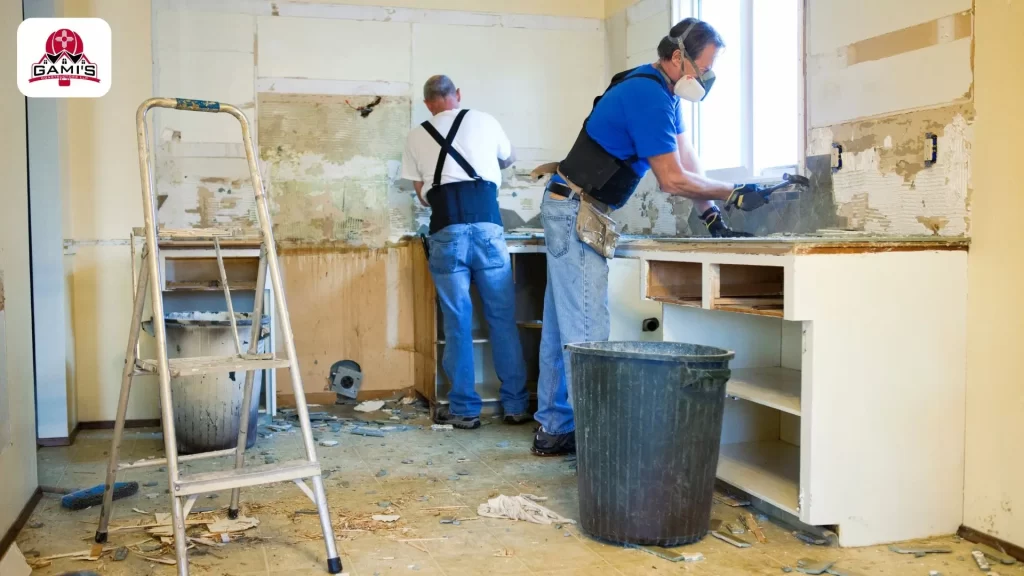
Remodels carry their own cost surprises. What’s inside existing walls isn’t always what you expect. A bathroom remodel, or kitchen renovation, is rarely as straightforward as it looks, especially in older Albuquerque homes. A good general contractor will assess the existing structure honestly before giving you a quote.
Frequently Asked Questions
Interior finishes, flooring, cabinetry, countertops, trim, and tile typically account for the largest share of new home construction costs, often 20–25% of the total budget. Framing and major systems (plumbing, HVAC, electrical) follow closely.
In most builds, framing costs more than the foundation. Framing typically runs 15–18% of construction costs, while the foundation runs 10–15%. However, in areas with difficult soil conditions, including parts of Albuquerque with caliche or expansive clay, foundation costs can climb significantly.
Custom home costs vary widely depending on size, finishes, lot conditions, and current material prices. Albuquerque generally falls within national ranges for residential construction, but labor costs, soil conditions, and regional materials can push projects above or below national averages. The best way to get a realistic number is through a detailed estimate from a local contractor who can assess your specific lot and plans.
Interior finishes offer the most flexibility because they are almost entirely driven by your personal choices. Choosing standard-grade cabinets instead of custom or carpet in secondary bedrooms instead of hardwood is a way to reduce costs without affecting structural quality.
Change orders, decisions made during construction that alter what was originally planned, are among the most consistent causes of budget overruns. Finalizing your floor plan and finish selections before breaking ground is the most effective way to stay on budget.
A typical custom home takes 8–14 months from permit approval to move-in, depending on size, complexity, weather, and contractor schedule. Starting the planning and permitting process early helps keep the project on track.
Vokalia and Consonantia, there live the blind texts. Separated they live in Bookmarksgrove right at the coast
It is strongly advisable. New Mexico's desert soils, including caliche layers and clay-heavy areas in parts of Albuquerque, can behave unexpectedly under a foundation. A geotechnical or soil report, typically costing a few hundred dollars, can reveal conditions that affect foundation design and overall construction cost before any money is spent on construction.
Know Before You Build
Understanding the most expensive parts of building a house isn’t just about curiosity; it’s about making better decisions with the money you have. Interior finishes, framing, mechanical systems, and the foundation will take up the majority of your budget. What you choose in each category, and whether you change those choices mid-build, determines whether the project lands on budget or blows past it.
If you’re planning a custom home, addition, or major remodel in Albuquerque, working with a contractor who prices work transparently and communicates clearly from the start makes all the difference.
Gami’s Constructors LLC is a family-owned residential construction and remodeling company founded by a father-and-son team with more than 30 years of experience in the Albuquerque area. They handle custom home builds, home additions, kitchen and bathroom remodeling, and full-service general contracting, and they give clients real numbers, not guesswork.
Ready to start planning your project? Call Gami’s Constructors LLC or request a free quote to talk through your vision, your lot, and your budget with a team that knows Albuquerque construction inside and out.